|
|
We are now offering RDI Acoustic Doppler Current Profiler (ADCP) data in RDI binary format. RDI binary data can be displayed and analysed using RDI’s WinADCP software package.
Please visit our Download Data page and select “by instrument” to download ADCP data in RDI binary format. Here is the site information, instrument names and time periods where we have collected data from RDI ADCPs to help you with your selection criteria:
Strait of Georgia, East Node (170m): RDI ADCP 150kHz WH (SN 8497)
Sites:VIP-01/VIP-02/VIP-03/VIP-04/VIP-05
Data collected between 2008-Feb-29 to present.
Strait of Georgia, Central Node (300m): RDI ADCP 150kHz WH (SN 8580)
Sites: VIP-01/VIP-02/VIP-03
Data collected between 2009-Sep-24 to 2010-Aug-27.
Strait of Georgia, East Node: RDI ADCP 600kHz WH (SN 7992)
Site: DDL-01 (40m)
Data collected between 2008-Feb-29 to 2008-Sep-25.
Strait of Georgia, East Node: RDI ADCP 300kHz WH (SN 2940)
Site: DDL-03 (107m)
Data collected between 2010-Feb-20 to 2010-Mar-12.
Watch a virtual tour of the VENUS Network. A new Google Earth movie of the VENUS facilities has been posted here.
VENUS selects world class instruments from suppliers that the general oceanographic community trusts. We rely heavily on the integrity of the supplier for meeting quality data “standards”. Our approach has not been to try to do any complicated internal checks/re-calibrations, but to monitor, manage, and document the history of these factory calibrations and upon request, make them available to the user. For instance, our primary seawater CTDs are high-end Seabird units that are regularly calibrated by Seabird. Seabird sensors and calibration procedures went through a rigorous evaluation as part of the WOCE program and this reputation, as well as stable calibrations/recalibrations of our instruments, allows us to provide the user the necessary quality assurance they seek. Continue reading Quality Assurance and Quality Control (QA/QC)
VENUS Observational Data Specialist, Marlene Jeffries, is team leader of the Inorganic Carbon group on a NASA sponsored cruise from Dutch Harbor to Seward Alaska, via the Bering Strait, Chukchi and Beaufort Seas to study the impacts of climate change on the arctic ecosystem. Being the first NASA oceanographic cruise, this is also a rare field meeting between ice scientists and open ocean scientists to quantify the changes in the arctic in the ice and out of the ice. Continue reading VENUS Team Member Visits the Arctic on NASA Cruise
During the next week VENUS will be at sea in the Strait of Georgia. We will be replacing the CTD at the Central Node, and putting down an autonomous platform. Data plots from Strait of Georgia will be interrupted during this time, after which the new data products will be available! Users can still access archived data from our Download Data Interface.
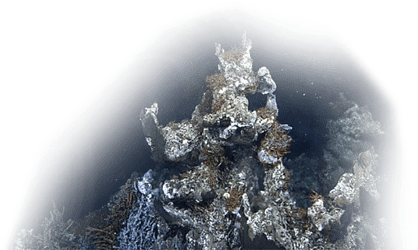
This week’s Image of the Week features a sponge reef on Fraser Ridge. During initial cable route surveys, VENUS examined this area near Vancouver at 165m depth. We directed the cable lay away from this area.
Similar “globally unique” reefs, in Hecate Strait, are now an Area of Interest for a marine protected area as announced on Oceans Day 2010. Established by Fisheries and Oceans Canada, Marine Protected Areas “protect and conserve important fish and marine mammal habitats, endangered marine species, unique features and areas of high biological productivity or biodiversity.”
Click here for the announcement at Fisheries and Oceans Canada: “Area of Interest for Potential Marine Protected Area in Pacific Region” (June 2010).
The announcement was also covered by the Globe and Mail, click here for the article “Move to protect B.C.’s glass sponge reefs”.
View more from the sponge reef on Fraser Ridge in our Feature Galleries.
Live VENUS data are in a free iPhone App from the Northwest Association of Networked Ocean Observing System (NANOOS). The NANOOS Visualization System (NVS) makes it possible for users to access and compare live ocean data from multiple sites in the Northwest, including the VENUS subsea laboratories, surface buoys, and coastal stations. Get it in the App Store: http://itunes.apple.com/ca/app/nvs/id373563865?mt=8.
On 8 May, NEPTUNE Canada commenced a scheduled maintenance cruise with the CSSF ROPOS embarked.
It is standard practice to complete a short test dive at the start of the cruise to ensure that all of the ROV systems are operating. NEPTUNE Canada graciously allowed us to use the test dive to unplug the DDL Extension cable from the DDL platform and see where the fault was located.
After unplugging the extension cable, the Node port was powered. The Node breaker once again tripped on over-current, suggesting that the fault lies within the extension cable and not the platform.
We are now examining option to recover both the DDL platform and cable.
Approximately 4 weeks after deploying a redesigned 5.5 km DDL Extension cable, the Node port that supplies power to the cable tripped on an over-current fault. Troubleshooting the issue is difficult as the only information that we have is the behaviour of the Node breaker when we try and power the cable. All indications suggest that we have a hard short circuit to sea water.
The worst case scenario would be an “event” that had physically damaged the DDL platform or the cable. To get a few more data points to assist in our maintenance decision making, we contracted Ocean Dynamics Canada Ltd. in Campbell River, BC to supply an inspection ROV and support vessel. The ROV was a SAAB SEAEYE FALCON
On Tuesday 20 Apr we proceeded out to the site of the DDL platform and launched the FALCON. The ROV pilot quickly located the platform and we were able to confirm that it did not appear to have been damaged or moved from its original location. We then commenced a cable survey to see if we could identify any visible damage to the extension cable itself. A storm was building and we were forced to recover the ROV before all of the cable had been inspected.
The dive confirmed that the DDL platform was intact and appeared undamaged. The extension cable in the vicinity of the node had moved and was now suspended off the bottom, resting on one of the Node lifting points. We could not confirm if the cable was showing any signs of damage where it was contacting the lifting point.
The next step will be unplugging the cable from the DDL Platform to see if there is an electrical fault in the Platform or connectors that is causing the issue. This will have to wait until we can get an ROV on-site with more capable manipulators.
The April 2010 Saanich Inlet Feature Gallery is now available. Visit http://www.venus.uvic.ca/gallery2/v/si/still/si_venus/2010/April2010/
|